A Time of Gathering Seeds

Happy Equinox Dear Ones,
I have to admit, I struggled a little bit with summer coming to an end this year. However, I am beginning to remember and enjoy the sweet gifts of the cool nights, the clear and brilliant sunsets, the autumn winds, and the gathering in of seeds.
The above image is from our 3rd grade harvest this fall at the Waldorf garden. The corn is Oaxacan blue corn, with seeds collected two years ago from the SB Permaculture seed swap (gathered by my dear friend and garden buddy Juliette). This is our second year of successfully growing it out and saving seed.
Oaxacan blue corn is an heirloom variety, meaning it's a traditional, non GMO, open pollinated variety preserved for its genetic lineage and unique qualities. This corn has been cultivated and grown by humans for somewhere between 7,000 and 11,000 years.
Our corn was planted the previous school year (May 2025) by the graduating 8th grade class during a block I teach about the three sisters garden and indigenous concepts of sacred reciprocity. We use readings from Braiding Sweetgrass for Young Adults and a song learned from the blessed elder and community song leader Laurence Cole, entitled ‘Respect One Another'. We plant a three sisters garden that the 8th grade leaves behind for those that come after them as a legacy and as an offering of gratitude for all they have received.
The 3rd grade will nixtamalize the corn and make tortillas together in the garden.
It is good to be back in the garden with the children again, gathering seeds.
Just before returning to teaching this fall, I had the incredible blessing to 'sit at the feet' of the adamantine elder that is Laurence Cole and step more deeply into the lineage stream of wisdom that he holds.
I was blessed to share in harvesting seeds from his lifetime of work and the profundity of his personal study and practice.
I gathered song seeds, prayer seeds, and seeds of memory for collective community grieving and healing in ways that increase a sense of belonging and encourage, according to one participant in our closing circle, 'more empathy than I've ever felt in my life'.
Precious seeds.
These are seeds I can grow to continue to feed the hungry world, seeking to awaken and remember ancient and future technologies of belonging and dreaming together.
These are seeds of embodiment and profound feeling, instead of dissociation and numbness (which so many of our technologies today provide and create).
If you'd like to hear more about my journeys with Laurence and entering the gates of grief in community, scroll down to read about my experience.
Witnessing the depth of grief that there is to feel in this life is profound. Feeling our grief gives us depth.
Also, feeling our grief gives us more access to our joy.
Laurence, as always, has a song that speaks to that with ‘Go Down Deep';
"You want to get up to the joy
you've got to go down deep
so go down go down go down"
Maha gratitude to Laurence Cole and the beautiful and brave community that formed a 'pop up village' to co-metabolize collective grief through witnessing and presence.
I hope you too have been gathering seeds to nourish the hungry world.
I hope you have been saving seeds that glimmer like tiny iridescent universes, and seeds resembling crescent moons with barbed tips to travel, and tiny seeds filled with precious oils. I hope. you have been saving ancient seeds filled with eons of wisdom.
I hope you have been gathering in seeds of love, tolerance, curiosity and connection, and not seeds of anger and othering.
I hope you have been gathering seeds to plant a garden of beauty when the darkness has passed and the season of renewal returns, as it always does.
With Gratitude and Appreciation for the seeds of beauty you bring to my life,
~Liz
P.S. I'm looking forward to seeing you soon for therapeutic massage, Craniosacral therapy, yoga instruction, Ayurvedic bodywork and lifestyle guidance, and clinical herbal support, or, in the garden.
Ancient Future Technologies and the Four Gates of Grief
I was registered for a grief ritual with Laurence Cole when the pandemic hit in 2020. The gathering was cancelled and life took me down another path. As I mentioned above, Laurence is an adamantine elder, having the strength and luster of a diamond.
I was blessed to sing with Laurence a few years later when he was visiting Santa Barbara from his home in Port Townsend, Washington. At that time I was able to learn several songs from him that I have sung and shared ever since.
Many of my dear friends who are community song leaders have also taught me medicine songs from his lengthy anthology of original compositions which have been harmonizing my spirit for many years as I sing and meditate on their depth and simplicity.
I was so grateful when the fates finally aligned for me to attend a grief ritual this summer in late August up in Mosier, Oregon at a soul friend's family land where three generations on two sides live together.
About 40 people gathered to share in a collective grieving ritual guided by Cole with his gentle and steady presence, his profound musical and poetic musings, and his channeling of the wisdom streams of several profound teachers on the path of good grieving.
Cole was a direct and devoted student of the late Malidoma Patrice Some and his wife Sobonfu Some of the Dagara tribe of Burkina Faso. Cole is also a long time devotee of psychiatrist and author Francis Weller, and other teacher/healer/rememberers, like the stunning Alyx Somas of The Collectivity Project, who was present and co-facilitating our recent gathering in Oregon.
Malidoma Patrice Some was a guest lecturer when I was attending Naropa University back in the late 90's and early 2000's, and I became connected to his story and his work at that time. Malidoma wrote the book Of Water and Spirit; Ritual ,Magic, and Initiation in the Life of an African Shaman. (I wrote about him in one of my previous newsletters)
In the autobiographical book Malidoma shares the story of being stolen from his family and village at the age of 4 by a group of Catholic Jesuits. The priests kept him at a 'school' (a cultural genocide prison) that he tried to escape from multiple times, until he finally succeeded when he was 20 years old.
They kept him from his village and his family for 16 years while perpetrating harsh abuse and cultural indoctrination. He finally escaped by punching a priest and walking the 125 miles through the jungle back to his village in Burkina Faso where he had not been since he was 4 years old. When he returned at the age of 20, after first being received with suspicion by his tribe, he was initiated and became a shaman of his village.
His name means 'friends with the stranger/enemy'.
Malidoma had to relearn his own mother tongue, but then also had the 'gift' of speaking and writing English, so he became a bridge between the traditional teachings of the Dagara tribe of Burkina Faso and the modern western world.
Some of the most profound teachings Malidoma has shared are those around technologies for communal grieving to maintain health, empathy, and to facilitate a full expression of the joy and pain of human existence.
In Ayurvedic medicine, anything that is not digested which gets 'stuck' and can't be broken down and remade for good, becomes 'ama', a sticky sludge that impedes the flow of health, vitality, and a sense of freedom.
This is true for physical digestion as well as for the digestion of life experiences and our response to them.
In my experience, deep grief work has facilitated the digestion of seemingly undigestible elements of my own life, and given me the power to turn those undigestible rocks, toxins, and poisons, 'ama', into new life, wisdom, more free flowing energy, and more love.
In addition to teaching from his lineage with Malidoma and Sobonfu, Cole has been a longtime student of Francis Weller, who wrote The Wild Edge of Sorrow. In his book and workshops, Weller teaches about what he calls the four gates of grief;
1) Everything we love we will lose
2) The places that have not known love
3) The Sorrows of the World
4) What We Expected and Did Not Receive
In the workshop weekend, we used questions based on the four gates to begin to enter our grief in small focus groups. We spoke bravely and witnessed with presence and empathy, without giving advice.
The small groups helped us to deepen into trust with one another and to share in the depth of collective suffering experienced by the members of our 'village'.
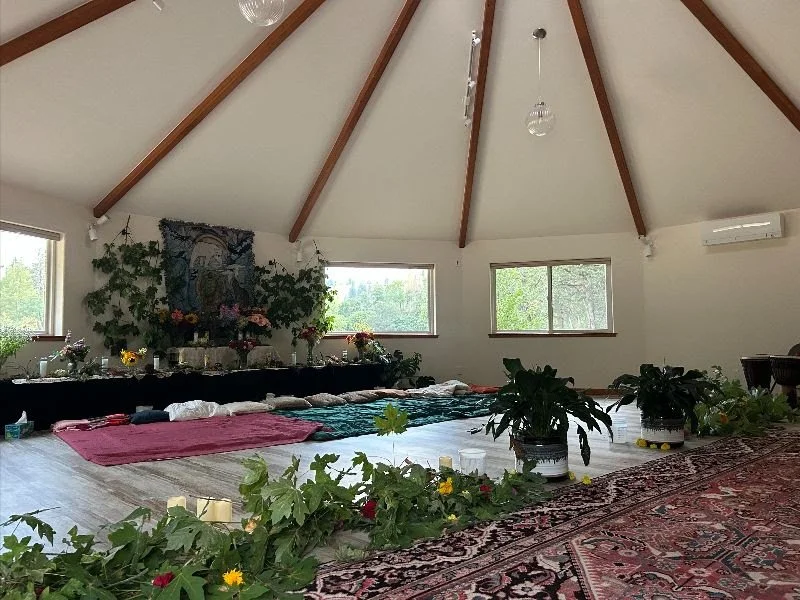
We engaged in two formal grief rituals, where a shrine was set up with blankets and pillows and an outer 'village' structure was created in the space.
The shrine was covered with flowers and individual prayer offerings which we had gathered at the beginning of our weekend by tying together bundles of items harvested from the surrounding natural landscape and infusing them with our prayers for the weekend.
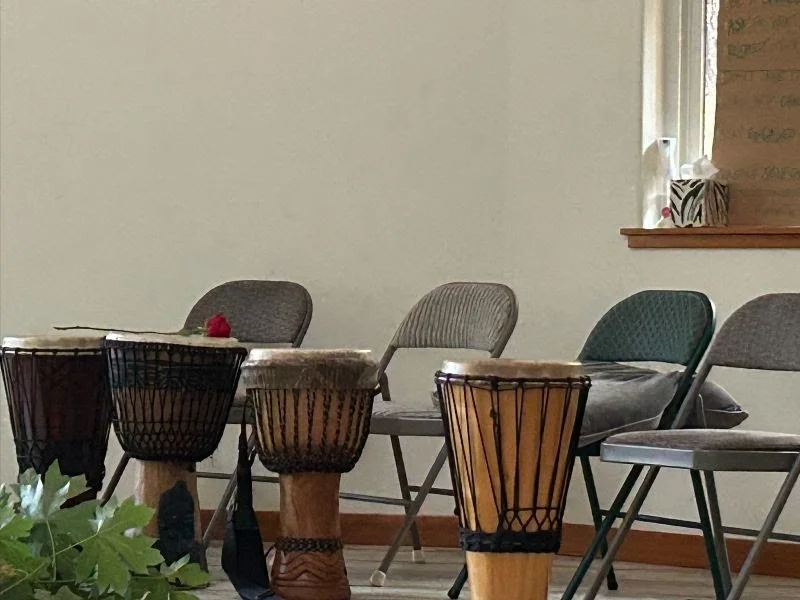
For several hours a group of drummers played while the 'village' sang and danced. Each time a person felt called to the shrine to shriek and scream and pound out their anger and grief, another person from the village would follow them and stand behind them or offer support as requested by the griever.
When the person who had grieved deeply at the shrine returned to the space of the 'village', there was cheering and clapping and celebrating the work that had been done.
So much deep energy moved through our collective process together. So much empathy for and understanding of the myriad of burdens each person carries was cultivated in the soil of our hearts.
We all emerged from our time together more connected, more deeply feeling, and more capable of sitting with our own grief as well as the grief of others.
Good grief. Literally.
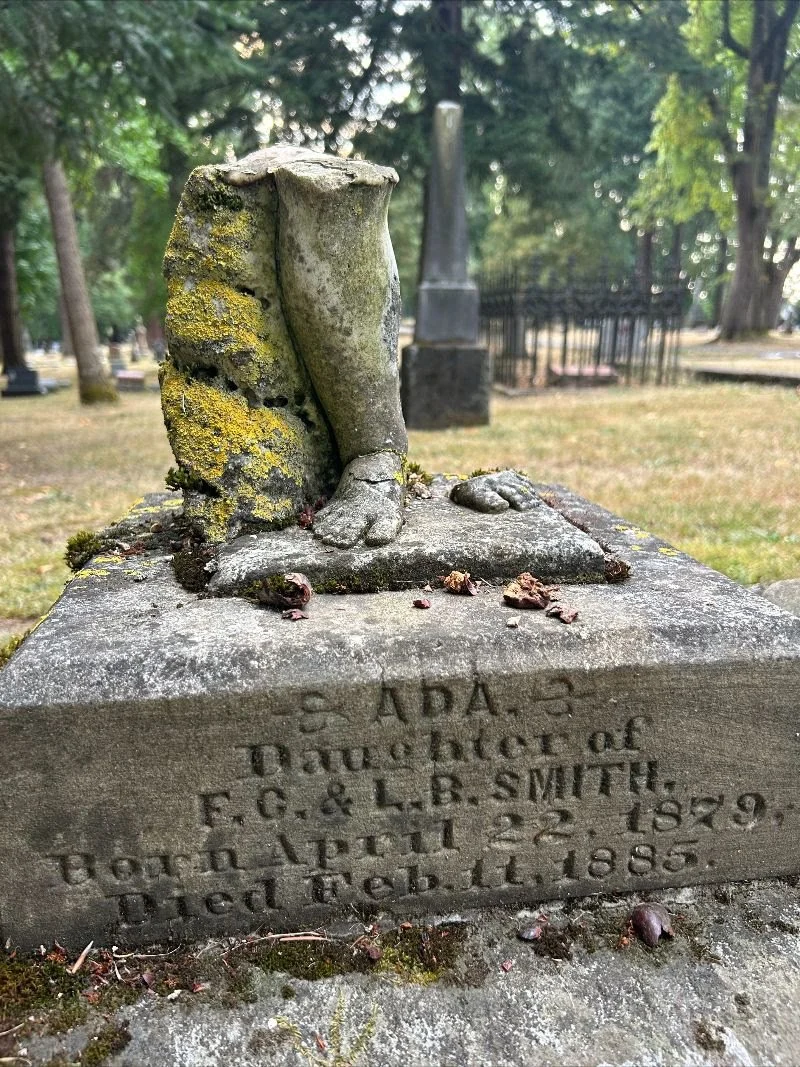
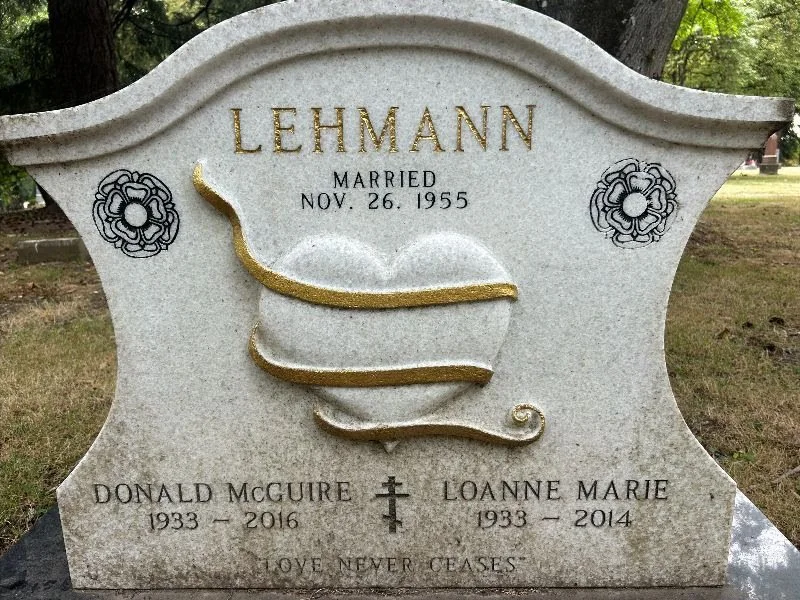
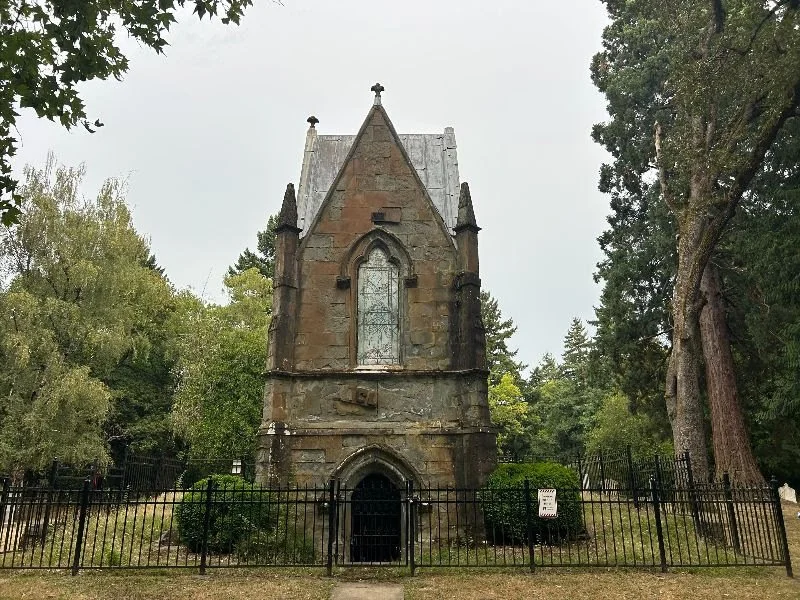
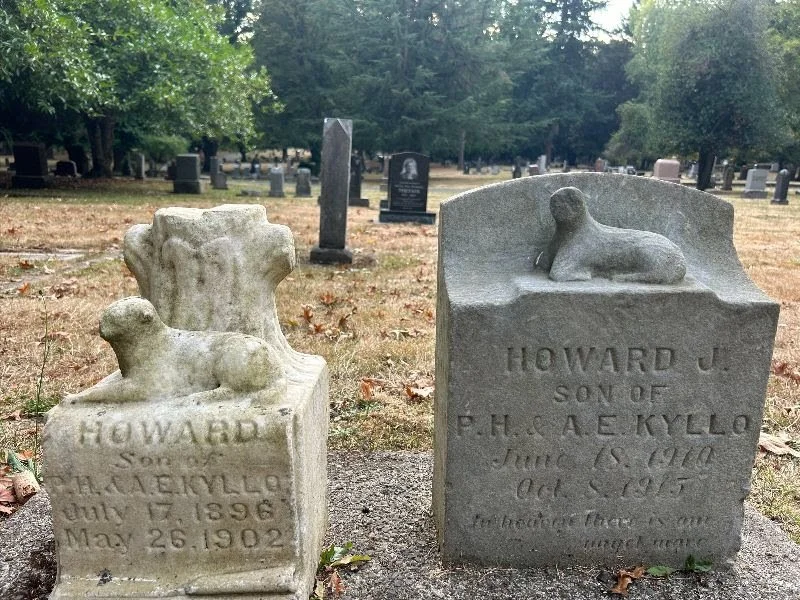
After I left the workshop, I spent two days in Portland in a personal writing retreat (the book continues...stay tuned), and walked to a beautiful old cemetery founded in 1855, to peruse stories of love and loss on the faces of graves.
In one of my previous newsletters I shared a bit about my love for cemeteries and my propensity to visit them wherever I go. (Some photos from the cemetery in Portland below)
I find visiting cemeteries is a powerful way to remember that 'every moment death awaits you', and it seemed a perfect finale for the experience of the grief ritual.
So, don't forget to laugh (and when you need it, have a good cry, some good grief, for goodness' sake).
You want to get up to the joy?
You've got to go down deep.
So go down go down go down.
I'll meet you there, because, as Laurence's song continues;
“We can do this, we will rise!"
With Love,
~Liz
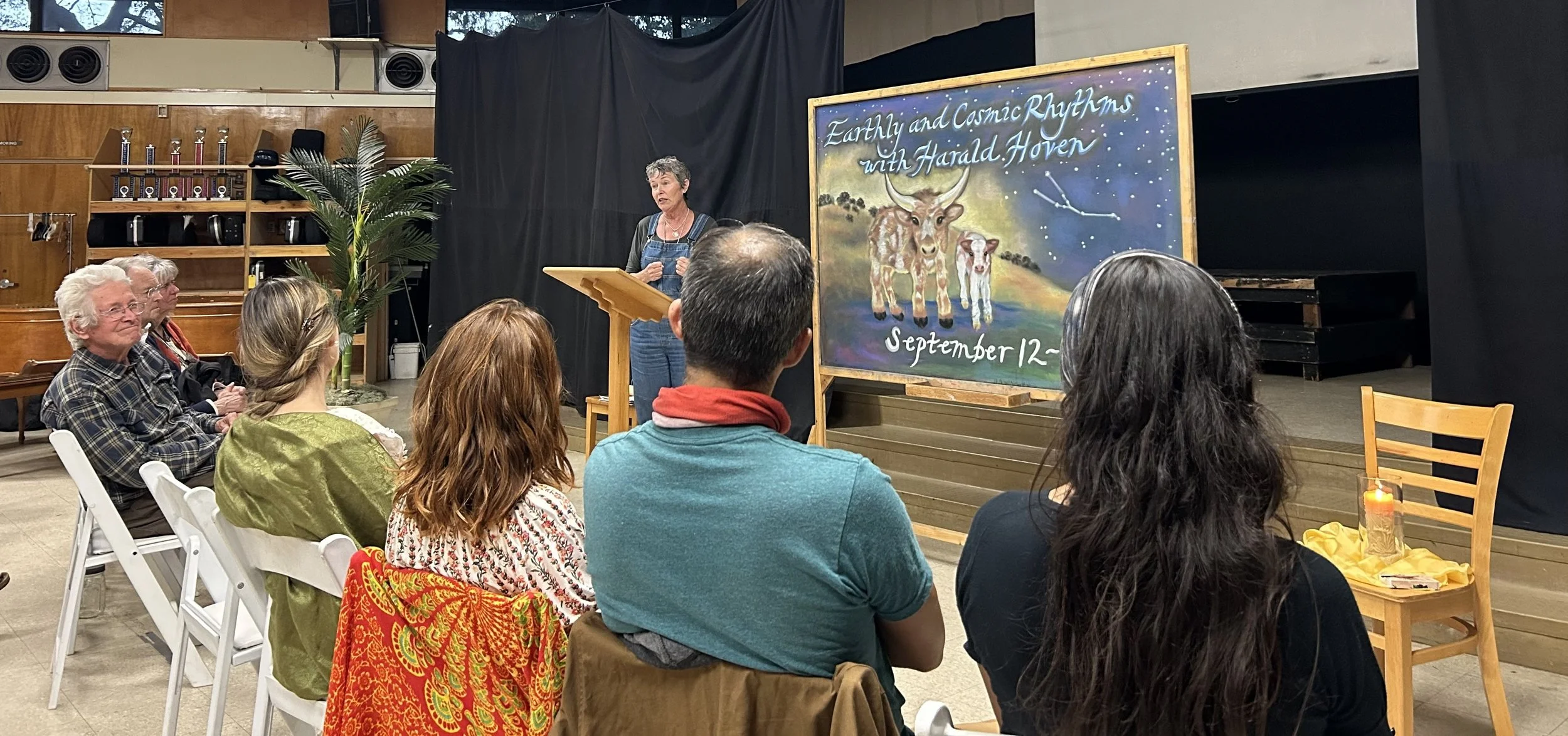
P.S. I couldn't resist also sharing a little bit about the recent Biodynamic Workshop I helped co-host at The Waldorf School of Santa Barbara, Earthly and Cosmic Rhythms with Harald Hoven. So if you're still with me (thank you), scroll to the very end to read a little bit about our wonderful weekend of tending the earth in harmony with the cosmos.
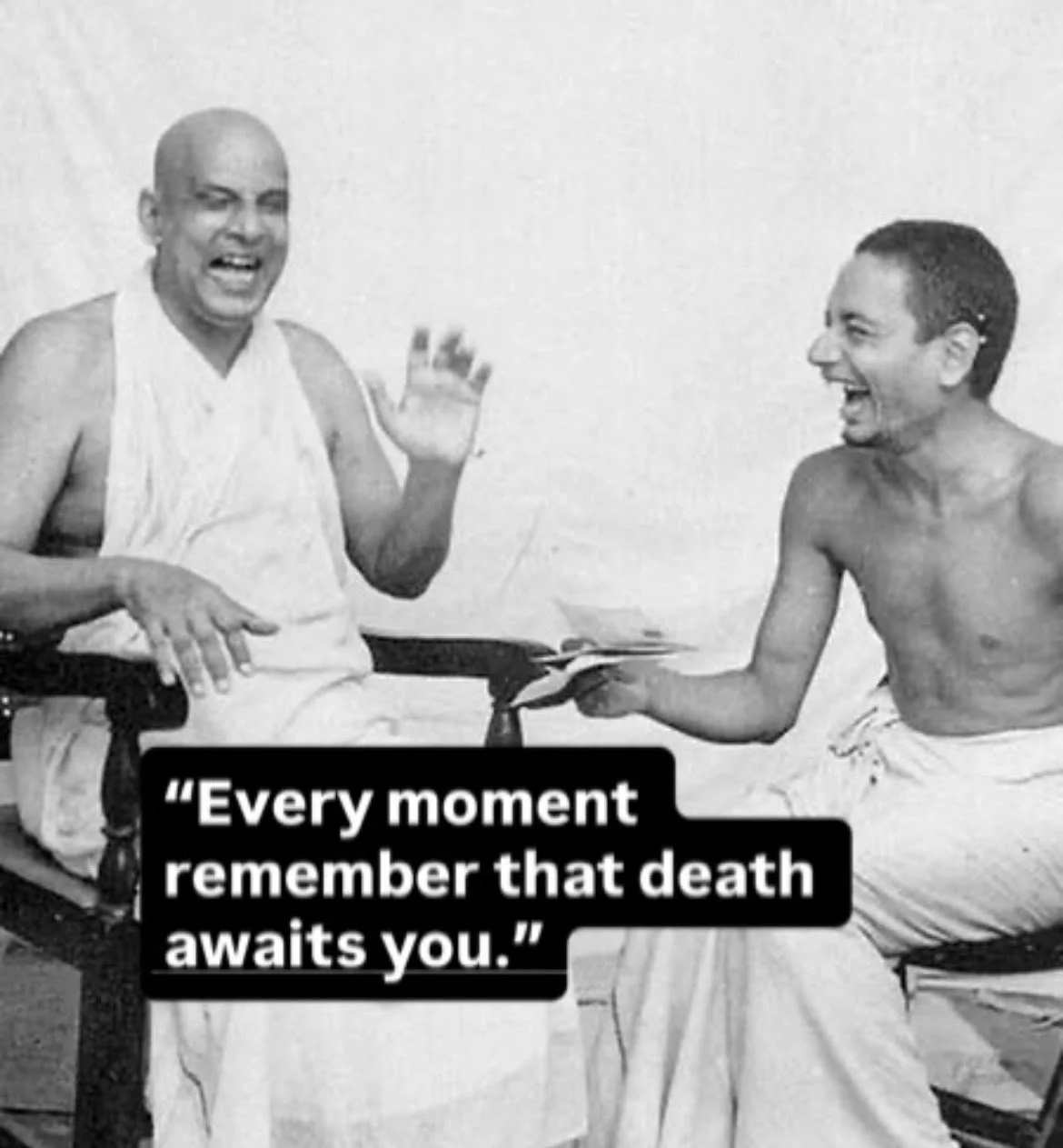
Swami Sivananda and Student joyously contemplating death.

Earthly and Cosmic Rhythms A Biodynamic Farming and Gardening Workshop
with Harald Hoven
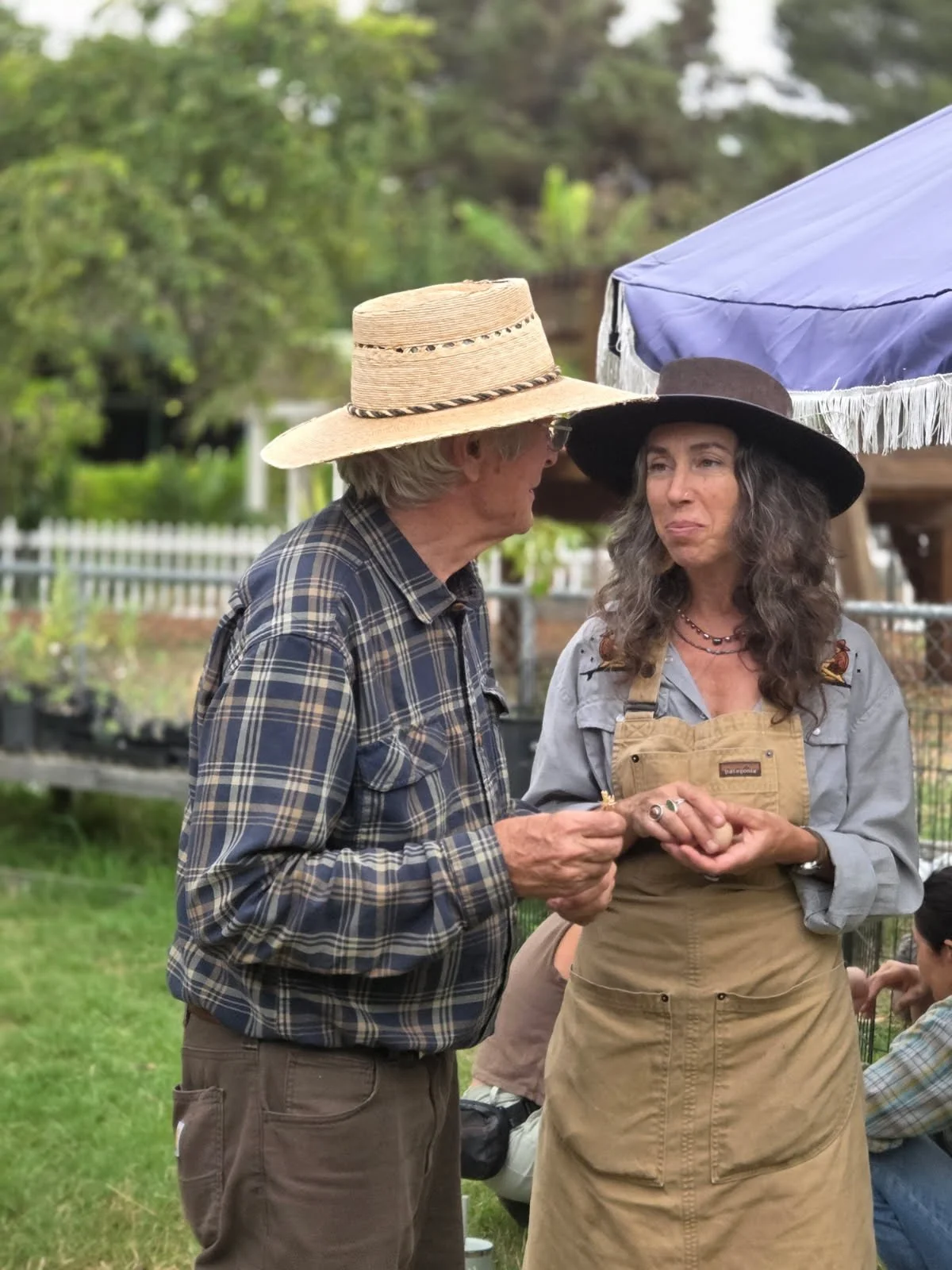
The weekend of September 12-14 I had the great gift to learn at the feet of another wise elder, the inimitable Harald Hoven.
I was able to help co-host him in the garden at the Waldorf School of Santa Barara in partnership with the Helen Hecker Anthroposophical study group.
(Anthroposophy is a spiritual science based on Rudolph Steiner's teachings which serves as the philosophical foundation for Waldorf education, Biodynamics, and Anthroposophical medicine.)
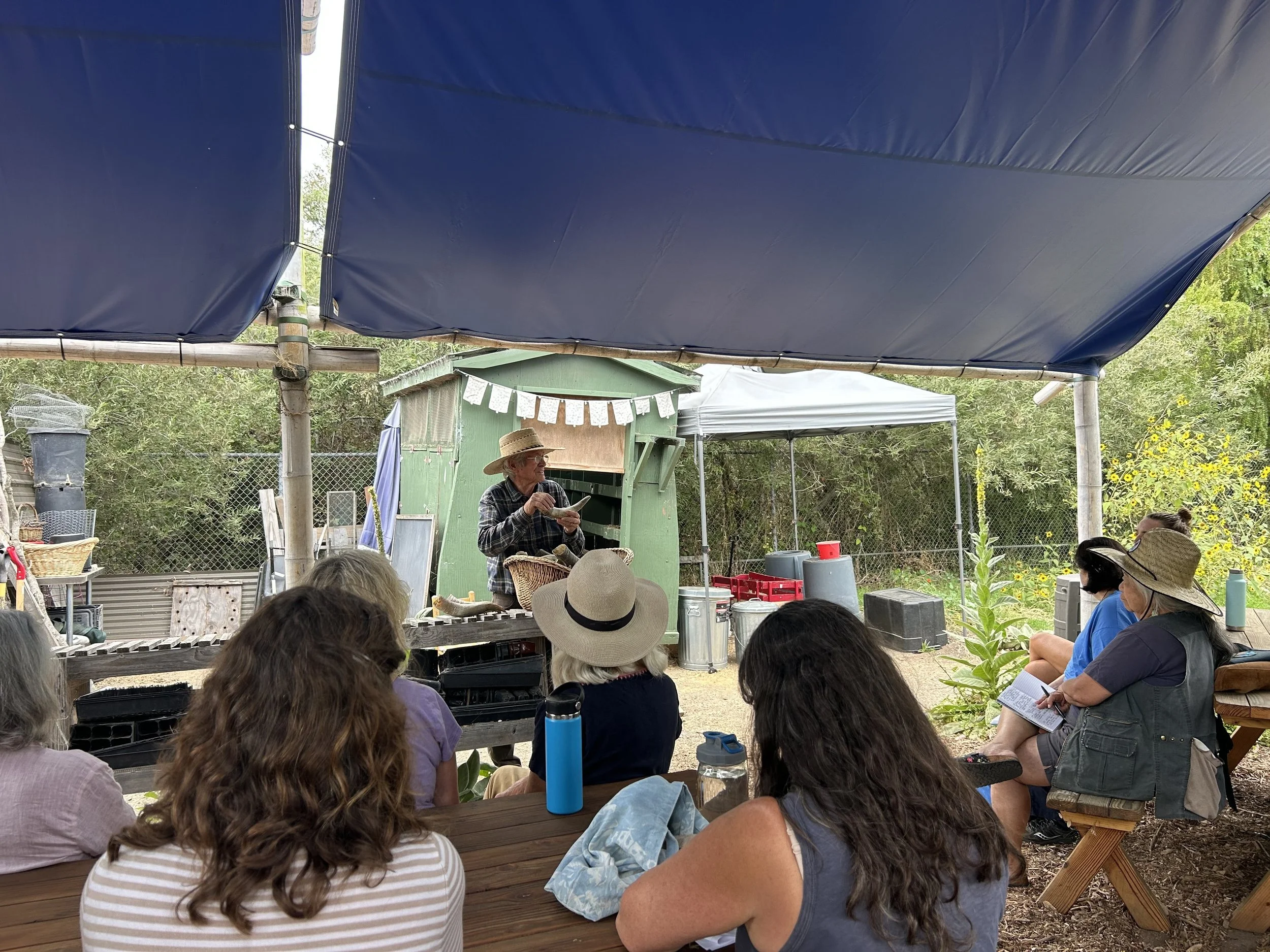
Harald Hoven is a master Biodynamic farmer and international teacher of Biodynamics, an agricultural method inspired by the work of Steiner. Biodynamics is based largely on Steiner's Agricultural lectures, which were originally shared in 1924, and the continued evolutions out of that original impulse.
Last year we celebrated the 100th anniversary of Biodynamics and Harald was here at WSSB to teach a delightful and well attended workshop on building Biodynamic compost loaves.
We hosted Harald again this year in our second annual Biodynamic gathering in central/southern California at the WSSB garden.
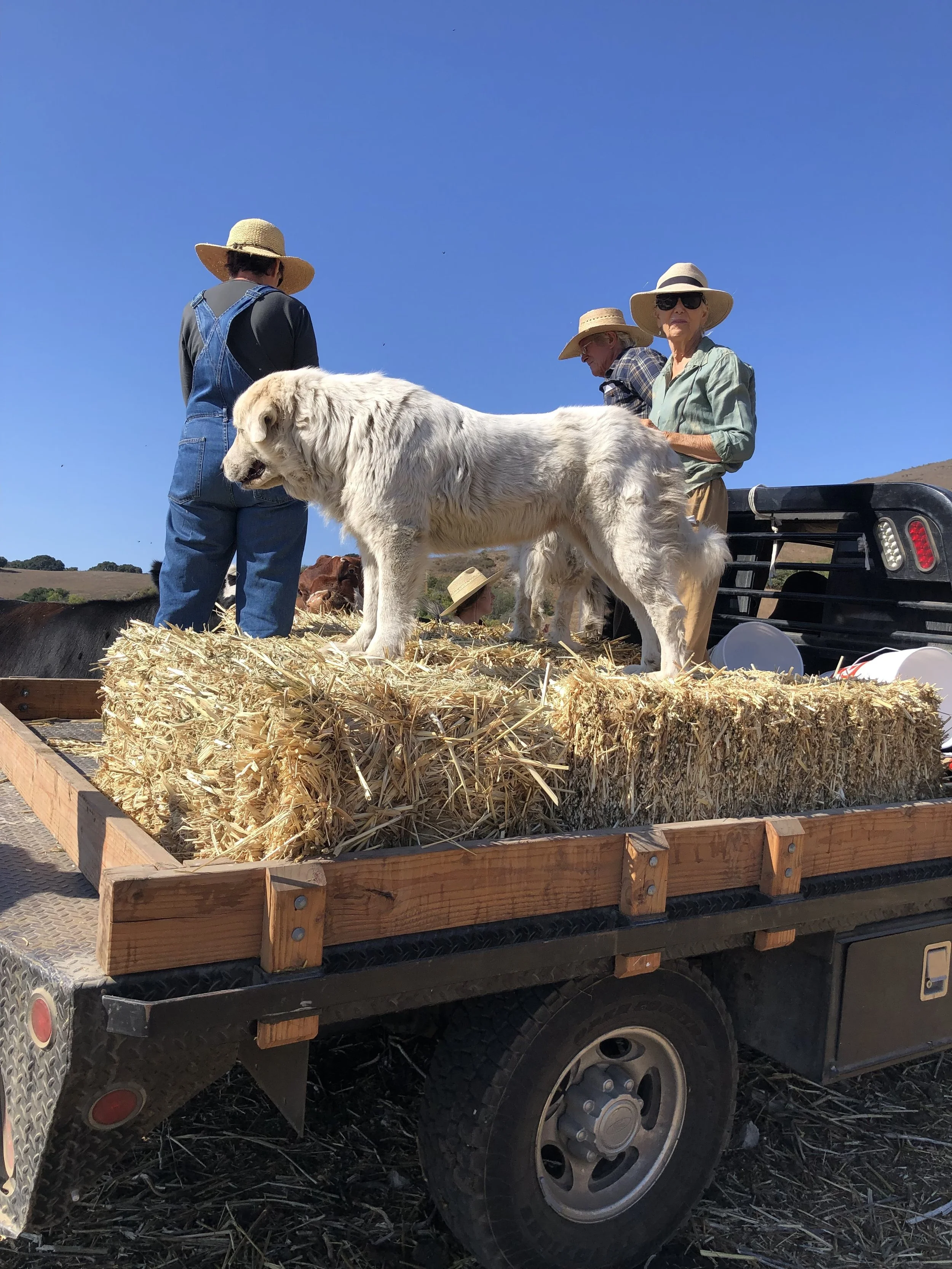
We began the weekend by gathering fresh cow manure from the ranch of one of our Waldorf families. After that beautiful field trip into the rolling hills of California and the pristine San Julian valley, we returned to the Waldorf School of Santa Barbara for an opening lecture with Harald.
He took us on a journey, through the rhythms of the day and night, the four phases of the moon, the ascending and descending forces we observe within and around us, and the cosmic relationships that we can tune in to and consciously interact with to deepen the success of our agricultural activity and to increase our ability to renew the earth with our devotion and loving ministrations.
It was a healing and enlivening process for the entire group which included attendance by alumni students, former WSSB classroom teachers, parents and grandparents of current students, young graduates of UC Santa Cruz's Agroecology program, and farmers, gardeners, and teachers from as far away as Mexico.
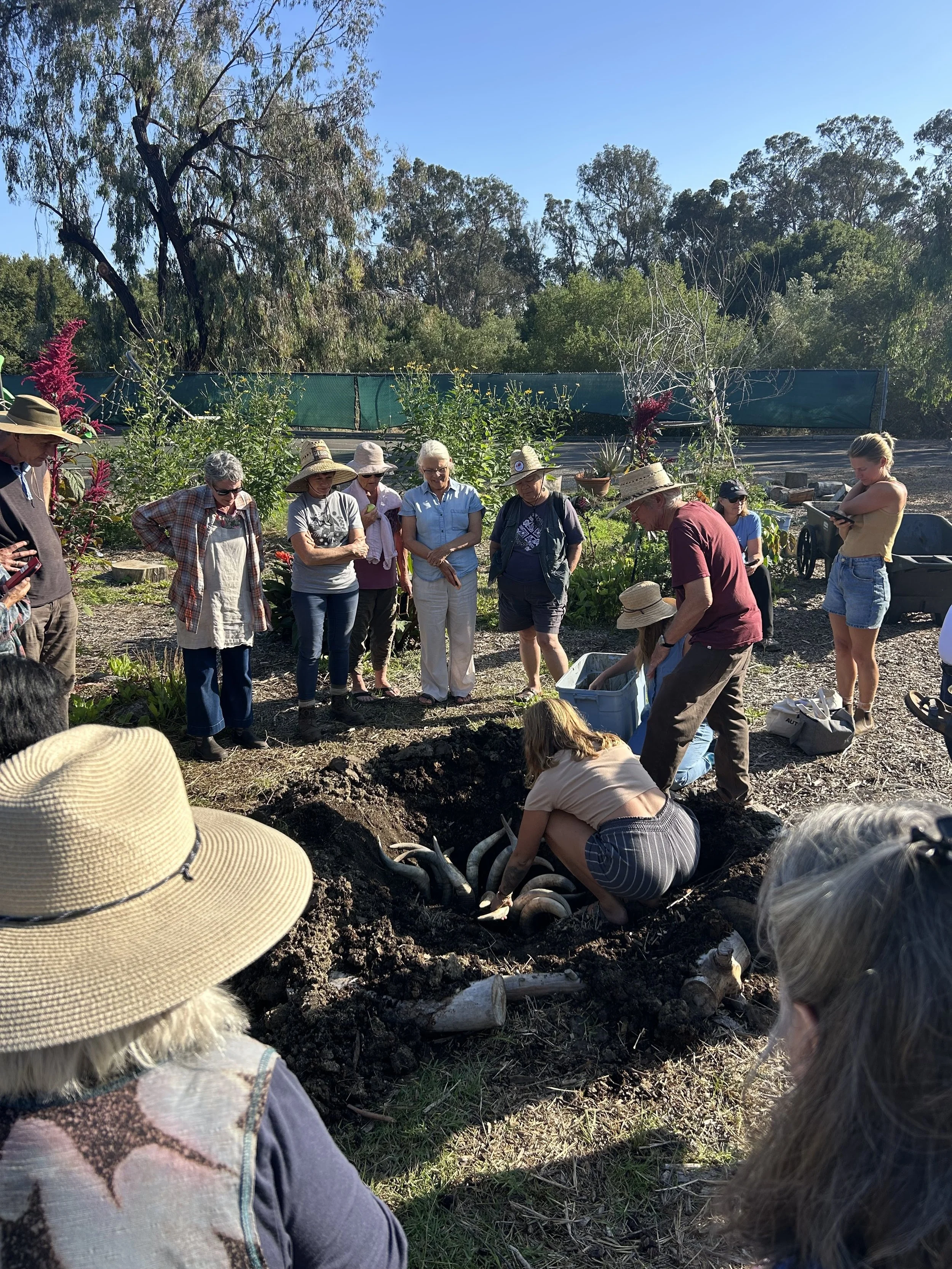
Together we buried 23 beautiful spiraling cow horns filled with rich fresh manure to create BD500 (which will be exhumed in the spring just after equinox) as well as building a barrel compost together in the garden which will be turned shortly with the students and applied to enliven the 'ecstatic skin of the earth', the soil.
If you are curious about Biodynamics, here are a few sources of information to dive deeper into the teachings and practice, and, please come join us next fall for the third annual Biodynamic workshop with Harald Hoven at WSSB. ‘
‘Where Hope Grows’ Podcast-Understanding Biodynamic Agriculture with Adam Russel
‘Pages and Pods' with Dr. Brett Wyatt (several short podcasts on Steiner's teachings)
Biodynamic Association of Northern California
The Challenge of Rudolph Steiner
Josephine Porter Institute for Applied Biodynamics
The Waldorf School of Santa Barbara